40th Anniversary Retrospective: An Interview with Dan Beachy-Quick

Dan Beachy-Quick is author of two recent collaborations, Work from Memory (2012) with Matthew Goulish and Conversities (2012) with Srikanth Reddy. He is the author of such poetry collections as Spell (2004), Mulberry (2006), and Circle’s Apprentice (2011), as well as a book of essays and tales entitled Wonderful Investigations (2011), and currently teaches in the MFA Program at Colorado State University. Recently, Beachy-Quick spoke with Poetry Editor Michael Marberry regarding the music of poetry, as well as the influence that John Keats has had on his own work.

Michael Marberry: Dan, we’re so very excited to feature three of your poems (from Romanticisms) in this Spring issue of The Journal! And such memorable, peculiar little sound-image creatures they are! Tell me: Where in the world did these particular poems come from? What inspired them, if anything, in particular? How would you describe the larger project of which these poems are a part? Am I wrong in assuming—based on the title, the tone, and the form—that there’s an homage to the great Romantic poets at work here?

Dan Beachy-Quick: The poems are an homage—and an offering and a plea and some kind of apology and maybe a repair. Well, I think of them in odd and manifold ways.

I spent most of the past year-and-a-half working on a book on John Keats—a book that might best be described as a biography of the poetic imagination. Somehow, I couldn’t start writing that book until I wrote these sonnets—of which, in total, there are fourteen. I felt as if I must apprentice myself to the form Keats did: the sonnet. I felt I must do so according to his own principles, his own strivings, and so the sonnets became a way for me to ask permission to think about Keats’s work in the ways that felt most valid to me: not to find a distance to judge from but, as Keats says about the truth of proverbs, to prove them upon my own pulse. I wrote them so as to add myself in, to participate, to diminish the distance between my mind and his—and as audacious as it sounds, I felt it an act of humility, of seeking entrance by asking to be worthy of thinking within the work of a poet I so deeply love.

It is a trespass, thinking. And to do it, perhaps one must apologize to the one being thought about. I couldn’t write the prose until I’d finished the poems. Now all are done, and the book on Keats—A Brighter Word than Bright: Keats at Work—will appear in the University of Iowa Press’s Muse Books Series this coming fall.

MM: What was it that compelled you to write a critical study about Keats specifically, as opposed to any other poet that you could’ve conceivably written about? In writing your study, in writing these sonnets, and in the process of, as you say, diminishing the distance between Keats’s mind and your own, what new things did you discover about this long-admired poet? And what new things did you discover about yourself as an artist?

DBQ: I encountered Keats late—not until graduate school. The experience was odd—a thrill of finding myself in the presence of a poem whose beauty felt so real as to be nearly threatening but also one that came to me without—so it felt—much hope for my understanding it. Some years later, working in Chicago, I read the letters bit by bit on the train in the morning. Those letters brought back to me that initial sense of beauty’s complications by seeing Keats’s own struggle with forming a poetics that refuses to step away from beauty as some essential quality a poem works toward or works within.

When I was asked if I might write a book for the Muse Books Series, I said, simply enough: “Yes, if Keats.” I wanted to hold myself closer to his thinking, to think through it, so to speak, for myself. What I discovered was something I suspected: a poet in the deep thrall of finding a way to write poems that is never reducible to a system and yet which must offer some explanation for its own method. There is a conversation between the audacity of the poems in the midst of their nearly palpable discovery and the letters that try to comprehend what the poems have opened—and yet, at times, the letters seem foremost, and the poems take a thread of thought and weave it back into the whole vision. It is—“it” assuming we can consider the poems and letters as a single project—the most moving, humane document I know of what it is to be involved in the making of poems.

What did I discover about myself? I had no real sense of how deeply formed I am by Keats, but I am. I feel as if I were a waxen seal that wakes up to its own shape and sees so intensely that sight becomes a feeling, what it is that had pressed down upon me and shaped my thoughts in the way they’re shaped. I suppose—strange as it is to say—that from Keats I have inherited my sensibility.

MM: I’m absolutely fascinated by the aural elements of your poems in our spring issue, their undeniable and captivating sense of “voice”—which, to my mind, is a defining characteristic of your work going all the way back to Spell. And your recordings of the poems only increase my appreciation for their sonics and the care that has seemingly gone into each and every line. But I wonder: Just how important is sound and voice to you as you’re writing? Are these aspects that you focus on deliberately, or do you find them to be intuitive byproducts of your process? How important is it for us to hear these poems (or any poems) as we read them?

DBQ: Essential, I think, to read so as to hear them—and perhaps so of any poem or almost any. Gerard Manley Hopkins broke my sense apart and taught me that the music of a poem is in itself a philosophic work, a kind of faith, a trust the poem makes its own meaning, inscribed within the words of the poem but not attributable merely to any lexical sense.

I feel sometimes as if the words of the poem are only there to allow access to a kind of music that the words in their certain pattern reveal, and that the mind is distracted by these words so that the music can play itself within the mind, unfettered by reason’s rigor. Poems come to meaning in such dark ways, almost occult. They trick the intelligence with itself so another work can happen in the blind spot.

For me, music is that other work. I might call it the unconscious of the poem, informing the words it is also not reducible to. It is, I think, some quality of Keats’s “fine excess,” for the music in the poem is what exceeds the language of it, and that to me is a primary aspect of poetry’s beauty: that it exceeds itself, over-brims its own fullness, and in doing so, leaves us with the wondrous remnants in mind.

As for my own process, I write when I can hear the music in the lines—a music of ear and a music of thought—and when I can’t hear it, I don’t write. The same holds true for prose, for it has its music too.

MM: It’s very interesting to hear your thoughts about the musicality of both poetry and prose and how your own creative process is often guided and dictated by how well you can hear that music at any particular point in time. One thing that I love about your work is how it often challenges my expectations of what a poem or prose-piece can (or should) be/do and, moreover, what a poem or a prose-piece can (or should) sound like.

To what extent does the music of poetry and prose sound similar and/or different to you? In the spirit of Keats and Hopkins (two wonderful examples), who are some contemporary poets and prose writers whose music you particularly admire? Lastly, as someone who often blurs those expectations surrounding poetry and prose, at what point in your creative process do you know whether what you’re writing is (or ought to be) poetry or prose?

DBQ: In perhaps a too-quick way, I hope not glib, I want to say that poetry has a music of feeling that becomes thoughtful, and prose has a music of thought that becomes feeling. There is a kind of agonized frustration I hope each art opens up to, a point at which certainty and uncertainty confound one another and intermix. Each music, I hope, allows a reader to clarify complexity without reducing it and, in doing so, gives us not the habit of thinking but the music that complicates that habit back into actual experience.

What is the experience of the page? This question matters to me, and it matters to me that one could ask that question reading a poem or an essay I worked on. Of contemporaries, I think few poets have captured this music in the way I’m trying to describe as has Susan Howe. Lyn Hejinian’s efforts have long been a model for the joys that thinking opens. And I think poets such as Brian Teare and Pam Rehm possess a lyric sensibility of deep, genuine reach.

As for the last question, the only time intent seems to keep hold of its nature is in that distinction between poetry and prose. I seem to know which I’m working on before I sit down to begin the work—as if, I guess, the work has decided for itself what it will be.

MM: The natural world and humanity’s relationship with that natural world seem to play such a strong part in much of your work, these poems included. Would you care to comment on the role that nature (or “Nature” perhaps) plays in your poetry—thematically, philosophically, creatively?

DBQ: At the most basic level, I cannot help but feel that the world is all we have by which to imagine the world. For many years, I’ve been quite taken with Emerson’s thought that the Delphic Oracle’s know thyself was the same as the Stoic principle to study nature. Adding mystery to the equation is Heraclitus: “Nature loves to hide.”

I feel deeply this work of self-investigation as worldly discovery and vice-versa—am convinced, perhaps in naïve ways, that the microcosm and the macrocosm maintain a connection, and that perhaps the poem is one of the places in which that collision of opposites maintains its difficult integrity. In this way, I don’t know how a poem can be other than a nature poem. It’s just that nature has a different boundary than we normally accept—a boundary as hazy and inter-penetrable as any concept, a place of drift and gesture. What is there? I ask myself. There is the world.

Posted on 05.13.13 // News

Contest Deadline Extended to May 15!

We have extended the deadline for our second annual contests in fiction, nonfiction, and poetry to May 15!

The winner in each genre will receive a $500 prize and will have his/her work featured in the Winter 2014 print issue of The Journal. All entries will be considered for publication. This year’s contest judges are Claire Vaye Watkins (fiction), Ira Sukrungruang(nonfiction), and Aimee Nezhukumatathil (poetry).

Fiction and nonfiction entries should include one story or one essay.  Poetry entries should include 1-5 poems. Simultaneous submissions are allowed; however, submitters must notify The Journal immediately via email if their work is accepted elsewhere.

Contest entries will only be accepted via The Journal’s online Submittable submissions manager. Submitters should include their name, contact information, etc. in the Submittable submissions form. The title of the contest submission should be the title of the piece(s) submitted. Do NOT include your name or any other identifying information in the submissions title or in the manuscript itself. Submissions that fail to adhere to these guidelines will not be considered.

Each contest submission must be accompanied by a $15 entry fee, which includes a one-year subscription to The Journal. Multiple submissions are permitted for the contest; however, each additional submission must be accompanied by a new entry fee. Close friends, family, and former students of the judges are prohibited from entering. The contest entry deadline is now May 15.


Posted on 05.01.13 // News

40th Anniversary Literary Retrospective: An Interview with Christopher Coake

Christopher Coake is the author of You Came Back (Grand Central Publishing, 2012) as well as the collection of short stories We’re in Trouble (Harcourt, 2005), which won the PEN/Robert Bingham Fellowship. In addition, Coake was listed among Granta’s Best of Young American Novelists in 2007. His stories have been published in several literary journals and anthologized in Best American Mystery Stories 2004 and The Best American Noir of the Century. Recently, Coake took some time to talk with Nick White, The Journal’s Fiction Editor, to discuss how his story “Sketching Firestorm,” which first appeared in Issue 24.2 (Autumn/Winter 2000), was not only his first publication, but perhaps his most important.

Nick White: Where were you in your career/work when “Sketching Firestorm” came out?

Christopher Coake: I was actually living about two miles away from The Journal office when the story was published. Donald Ray Pollock and I had a similar experience, in that The Journal gave us our first professional publications—and then Michelle Herman found out our personal stories, learned that we were both aspiring and serious writers, and began trying to talk us into getting our MFAs at Ohio State. She was successful, too—so my story came out just a few months before I began the program.

I’d submitted this story to something like twelve other journals, on and off over four years. It was literally the only publishable work of fiction I’d ever produced, and I’d been clinging to it as proof to myself that I could be a writer. If The Journal hadn’t taken it, I’m not sure what my path would have been. I can say that the validation I got—and Michelle’s ongoing interest in my work—made an enormous impact on me. I could imagine quitting, before that story was accepted. Afterward I couldn’t.

NW: If you could say something to your younger writer self who wrote this piece, what would you say?

CC: “That’s a good start, buddy, but this is the last story you’re going to write for a long time, if ever, while secretly wishing you were David Foster Wallace. Now relax, go to school with a clear conscience, and figure out what you really want to say. It’ll be all right.”

NW: How does “Sketching Firestorm” compare to the work you’re currently doing/planning to do in the future?

CC: As the previous answer suggests, “Sketching Firestorm” is much more postmodernly playful than a lot of the stuff with which I’ve been successful since. One of the things I learned about myself while at Ohio State is that I’m better at portraying complex emotional states than I am at wild formal experimentation. I love that sort of thing, and my first book, We’re in Trouble, experiments a lot in terms of structure and time. Lately, though, I’ve been much more interested in simply telling a good story—which, as it turns out, isn’t so simple after all.

NW: Did you learn anything about writing/yourself as an artist while writing this piece?

CC: Yes. This was the first story I wrote that really worked, on all the levels I was aiming for. And it works that way because I finally was able to get some of my personal disturbances on the page without feeling overly beholden to my own biography. In other words, I was in that state of composition where I was in the perfect balance between control and access to the subconscious. If that makes any sense. I suppose what I’m saying is that this was the first story I wrote that felt like good writing when I was writing it—and which was then confirmed for me as good by others. This story kinda calibrated me.

NW: Has your writing changed much (or any) since writing this story? How so?

CC: I can honestly say I’ve written very little like “Sketching Firestorm” since it appeared. But it’s a story about love under threat, about the inevitable loss that comes along with love, so thematically it’s right in line with everything I’ve written since.

Posted on 04.05.13 // News

Announcing The Journal’s Second Annual Contest

The Journal is pleased to announce its second annual contest in fiction, nonfiction, and poetry. The winner in each genre will receive a $500 prize and will have his/her work featured in the Winter 2014 print issue of The Journal. All entries will be considered for publication. This year’s contest judges are Claire Vaye Watkins (fiction), Ira Sukrungruang (nonfiction), and Aimee Nezhukumatathil (poetry).

Fiction and nonfiction entries should include one story or one essay.  Poetry entries should include 1-5 poems. Simultaneous submissions are allowed; however, submitters must notify The Journal immediately via email if their work is accepted elsewhere.

Contest entries will only be accepted via The Journal’s online Submittable submissions manager. Submitters should include their name, contact information, etc. in the Submittable submissions form. The title of the contest submission should be the title of the piece(s) submitted. Do NOT include your name or any other identifying information in the submissions title or in the manuscript itself. Submissions that fail to adhere to these guidelines will not be considered.

Each contest submission must be accompanied by a $15 entry fee, which includes a one-year subscription to The Journal. Multiple submissions are permitted for the contest; however, each additional submission must be accompanied by a new entry fee. Close friends, family, and former students of the judges are prohibited from entering. The contest entry deadline is May 1.

Posted on 03.31.13 // News

The Big Ten Subscription Bundle Deal at AWP

If you’re going to Boston for the Association of Writers & Writing Programs Conference, then golly, friends, do we have a deal for you. This year The Journal has teamed up with Prairie Schooner (out of the University of Nebraska, Lincoln) and The Iowa Review (out of the University of Iowa) to offer the Big Ten Subscription Bundle for the low, low price of $45! That’s right, you get one year of each magazine for less than you’ll pay for three cocktails at the hotel bar. That’s 11 total issues and a whopping $23 off the list price! I’ve sold kidneys for less! We’ll only be selling subscriptions for the bundle deal at The Journal’s table (i10) at the bookfair, so please stop by and sign up. We’ll be accepting payment in the form of cash, check, card, and endangered species.

Big Ten

Also, if you’re free Friday, March 8, at 10 in the PM, then come to suite 2309 in the Sheraton Boston for The Journal’s offsite reading in honor of our little magazine’s 40th Anniversary. We’re going to hear readings by former contributors including the famous and fabulous Lee Martin, Emilia Phillips, Antonio Elefano, Suzanne Richardson, Marcus Wicker, and Leslie Parry. Free food and drink will be provided as long as supplies last, or until our stores are devoured by a herd of starving, alcoholic zombie-writers.

AWP Reading

Posted on 03.06.13 // News

40th Anniversary Retrospective: An Interview with Linda Bierds

Linda Bierds’ many books of poems in include Flight: New and Selected Poems (Putnam 2008) and the upcoming Roget’s Illusion, forthcoming from Putnam in 2014. A longtime contributor to The Journal, Bierds’ poem “Steller’s Jay” appears in Issue 37.1, Winter 2013. Bierds recently spoke with Managing Editor Alex Fabrizio about the poem, its relation to her larger body of work, and the inspiring power of both awe and skepticism.

Alex Fabrizio: Can you tell me a little bit about “Steller’s Jay,” published in our Winter 2013 anniversary issue? It’s a gorgeous, rich poem—where did it come from? Is it part of a project you’re currently working on? (I had to Google Georg Steller, I’ll admit. Did you hear about him or his jay first?)

Linda Bierds: I heard about his jay first. Then my family gave me Dean Littlepage’s book, Steller’s Island, which looks at Georg Steller’s sea journey to North America in the late 1700s. During that voyage, two ships sailed together, the St. Peter and the St. Paul—Steller was on the St. Peter—and I was fascinated by the intricate signal codes the crew used to communicate with one another: the “pennants, jacks, drums, bells, lanterns, guns and speaking horns” that “delivered a language precise as script.”

The poem is part of my next book, Roget’s Illusion, which will be out early in 2014. Language is its central subject.

AF: I’m fascinated to hear you characterize the new book as centered on language. When I think of your poems—both in and out of our pages—I think of vividness of image, textured description, emotional heart and resonance. Is the focus on language a new project? A recontextualizing of a love of language that’s always been present in your work?

LB: Not a departure, more of an extension of the interests I’ve had throughout my writing life. In this case, I’m thinking of language in terms of its limitations. To back up a bit: Peter Roget was fascinated by the striking patterns a spoked wheel makes when it rolls behind a picket fence—the spokes often appear to be turning backward, or curving downward, or sending out luminous lines. These visual deceptions became known as Roget’s Illusion.

Roget’s decades-long project, the thesaurus, represented another kind of illusion to me, an ever-changing, increasingly-nuanced projection of idea and synonym. I think of him through the years gathering those words—thousands of synonyms and antonyms aligning as the concept of

Sensation or Volition or Space emerged and constantly shifted. It must have been like looking through a kaleidoscope of sand.

I have a number of characters in the new book who work with language—Henry James, Virginia Woolf—but also those interested in illusion in its broadest sense, including the scientist Michael Faraday.

AF: Roget’s Thesaurus is one of the many volumes on shelves of The Journal office! As you know, The Journal is celebrating our fortieth anniversary in 2013. It looks like your poems first appeared in our pages in 1990 and 1991. What was your writing life like back then? Is there anything that you would say to your 1990s-era writer self? Any words of encouragement? Admonishment?

LB: Let’s see, my writing life in 1990. I was working part-time at the University of Washington, teaching a few classes and editing. I worked about twenty hours a week, always in the afternoons, which left lots of time for writing. I had converted a shed in my backyard into a studio—no phone—and I’d go there each morning from about nine until noon. I loved that time, tried never to sacrifice it, never to let other “work” take me away. In looking back, though, I realize that I sold short the value of less lengthy writing sessions; I didn’t take enough advantage of them. I realize now how important even thirty quiet minutes with a poem can be.

AF: How do you think your work has changed or remained constant since these poems we published (more than two decades ago!): “The Helmet of Mambrino,” “Nancy Hanks Lincoln in Autumn: 1818,” “The Running-Machines,” “Winterreise, for Three Voices”?

LB: The sources of my work have remained fairly constant over the years; that is, I’m inspired by history and biography more than by contemporary events and autobiography. But the vision within the work is frequently darker. Each of the earlier poems that you published, even the Nancy Hanks Lincoln poem, began from a moment of visual or factual wonder that I associate with awe. The Steller poem began from a wonder that I associate with skepticism—or at least an extended questioning.

AF: Wonder—I like that, and it feels right. Can you attribute this “darker vision” to anything in particular? I like that the wonder you suggest isn’t necessarily a positive thing; wonder seems to me almost twin to horror.

LB: Awe always will be a generative response for me, I hope, but as I get older, skepticism joins it more often.

Posted on 02.28.13 // News

40th Anniversary Retrospective: An Interview with Nancy Zafris

Nancy Zafris is the series editor of the Flannery O’Connor Award for Short Fiction, a position she took after nine years as fiction editor of The Kenyon Review. Her fourth book of fiction, a collection of short stories titled The Home Jar, is out this April. She is the recipient of many awards and grants, including two National Endowment for the Arts grants. She has taught at several universities, among them Masaryk University in Brno, Czech Republic, as a Fulbright Fellow. Each June she teaches at the Kenyon Review Adult Writers Workshop. Recently, she took some time to speak with Nick White, fiction editor, to discuss the ways in which she has changed as a writer since her first publication in The Journal: “Late May,” which appeared in Issue 14.2 (Winter 1991).

Nick White: Where were you in your career/work when this piece came out?

Nancy Zafris: I’d won the Flannery O’Connor award for my first book, a collection of stories titled The People I Know. I was in the midst of trying to get my first novel, The Metal Shredders, published.

NW: If you could say something to your younger writer self who wrote this piece, what would you say?

NZ: Smile more. Don’t be afraid to say hi to Lee K. Abbott. Good idea about having a kid. Write more thank-you notes, especially to Buddy Nordan and Andre Dubus.

NW: How does this piece compare to the work you’re currently doing/planning to do in the future?

NZ: I don’t think I would write those pieces today. Phones don’t ring in the den anymore, for one thing. The cell phone has been great for TV soap operas, not so great for the short story. It takes out oft-needed small obstacles. Flat tire on a deserted road? No problem. The writer would now have to account for no reception, dead battery, or no cell phone at all, which might unfairly present a character as a Luddite.

NW: Did you learn anything about writing/yourself as an artist while writing this piece?

NZ: In the story “Furgus” [published in Issue 22.2 (Autumn 1998) as “Furgus Welcomes You”] I realized I was trying to write a story out of a premise and that’s why it gave me trouble: false starts and different incarnations and characters. It’s better for me if I just start with a sentence or paragraph and discover the story, and then I can go back and shape it.

NW: Has your writing changed much (or any) since writing these stories? How so?

NZ: What one gains in technique can lead to deforestation in the writing that is both good and bad. Keep the energy and the willingness to proceed stupidly.

Posted on 02.21.13 // News

40th Anniversary Restrospective: An Interview with Rae Gouirand

Poet Rae Gouirand’s first book, Open Winter (Bellday Books, 2011), has won the 2011 Bellday Prize, a 2012 Independent Publisher Book Award for Poetry, and the 2012 Eric Hoffer Book Award for Poetry. A regular contributor to The Journal, her poems first appeared in The Journal Issue 27.1, which was published in 2003. She recently spoke with Managing Editor Alex Fabrizio about Open Winter and other first books, manuscripting, and California’s Central Valley.

Alex Fabrizio: We’re just delighted to feature you in our anniversary contributor series, and pleased to report that your first book, Open Winter, was published by Bellday Books in 2011 to rave reviews and a profusion of prizes. Tell us a little bit about the book. How long have you been working on it? What inspired its themes and major concerns?

Rae Gouirand: Thanks, Alex, for the welcome. Since The Journal was one of the first journals to publish my work, it’s awfully nice to talk with you guys at this point in time. I’m not sure there are satisfying, definitive answers for those questions when the book in question is a first collection, and on top of that, I have a hard time separating the idea of working on the book from the project of being, honestly. If you’re a maker of things, there’s huge overlap between the project of living and one’s creative work. What I can say about the work that was published as “the book” is that the oldest poem in it was written in my first year of grad school, in 2000, and that the newest one (which was, unfortunately, pulled from the manuscript at the last minute because of space issues) was written just a few months before the manuscript was accepted in 2011. Open Winter was finalisted for a great number of first book and open competitions during the two and a half years it was circulating, and went through a few different incarnations on its way out into the world: it was at one point a collection in two acts, then ordered almost backwards, then, finally, arranged into four sections titled for fragments within those sections.

What inspired its themes and major concerns? …Can I just say “experience?” (Including my experience of others’ art?) All writing is both experiential and exploratory, regardless of its genre. In poetry, the line is the meeting edge of those two currents, and form is the border between the poem’s reality and its imagination—and just as faulty (think: earthquakes) as any argument we make about it. What the poems are “about” strikes me, always, as the wrong kind of question to ask, and I’ve always had a particularly hard time addressing that one: poems are about meaning. Not symbolism, but meaning, and how it can be made, acknowledged, or named. How sense can be communicated. A lot of the poems in Open Winter take the shape of meditations on continuity and interruption, or perpetuity and disruption, in the world and inside the self. The images and figures are seasonal, historical, hologram—and so was the process of writing the book. Poetry is, for me, perhaps a little more about white space than it might be for others: creating it, defending it, recognizing it, allowing it.

AF: Wow! It sounds like Open Winter went through a number of iterations before it found its current/final form. Do you have any advice for poets working on putting together their first manuscripts?

RG: Yes. I think it’s in the best interest of your poems that you are as far inside them as possible during the writing—that you engage what they are, and what they want from both you and the reader, entirely—but you need to be as far outside of them as possible during the manuscripting stage. The ideal time to work on a manuscript is when you’ve gained enough space from the work that the individual poems feel unfamiliar and surprising again. When they are just poems—not your poems. While it might seem more intuitive that you’d want to arrange your work so that it illuminates what you most want your reader to notice about it, and that that could best be achieved by mapping the most strategic or resolving arc for the individual pieces, I don’t think that those arcs necessarily serve to draw the reader into individual poems, to absorb them maximally. Engagement comes, I think, from there being enough room for readers to move, to realize the connections for themselves. And you want the reader to engage. That’s what will bring them back around for a second read. So many writers these days are challenging narrative tradition, its linear orientation, in fascinating ways. There’s no reason poets can’t look outside of beginning-middle-end, crisis-and-resolution, call-and-response, then-and-now, etc. templates for their manuscripts. I most want to read books that are like insane little art museums, or glimpses of mind itself. Books that behave the way that poetry itself behaves.

AF: As you know, The Journal is celebrating its 40th anniversary in 2013. It looks like your poems first appeared in our pages in 2003, now an entire decade ago! What was your writing life like back then? What, if anything, has changed?

RG: It’s so hard to imagine that decade as a decade!—2003 was, coincidentally, a pretty transitional year for me both on and off the page. I left a (post-MFA) lectureship at the University of Michigan to move to California with my partner at the time, and spent that year (sort of) writing full-time on a post-graduate fellowship award I’d won at Michigan and deferred. On some level, I think I spent most of that year taking apart my poetics: more narrative impulses gave way to new modes, and for quite some time none of my work made any sense to me at all, except when I was actually in the flow of writing. I could not have described it coherently at the time, but I think a new part of my brain was opening up, possibly so suddenly because my life was suddenly so unfamiliar. I managed to keep working my way further in—falling further away from what I’d originally thought my project as a poet was—after I returned to teaching and came to feel more grounded in all the levels of uncertainty that have become facts of my life since exiting the MFA cocoon. The timeline for coming to feel at home in and deeply identified with California’s Central Valley runs parallel to the timeline on which I came to feel really secure in the degree of openness and abstraction that characterizes most of my more recent work. I think my life on the west coast has shown me what my headspace actually looks like, and therefore opened up my poetics pretty strikingly. (And I don’t just mean in verse. The west coast has also helped me figure out a lot of key things about how my prose wants to behave.)

AF: It’s interesting to hear you talk about how your relocation to the west coast has run parallel to these changes in your work. Can you tell us more about this process? What about California’s Central Valley has affected you, or made you more open to abstraction and uncertainty? Or do you think these changes are simply evolutions of you as a writer—could they have happened anywhere?

RG: The Central Valley feels right in my blood—like the place I’m supposed to wake up most mornings, though I have loved other places deeply while they were home and know I will have additional places I call home in this lifetime. The land is alive, the light is spectacular, the sky is enormous, and even after a decade I can’t get over the miracle of persimmon trees in autumn. Also, most of the people I’m close to in northern California are east coast natives who’ve chosen to make their homes far from their points of origin, which flavors day-to-day life with that island community phenomenon I love to experience on residencies (birds of a feather ending up in the same place, instantly cognizant of their kinship). Those two factors have a lot to do with it, but ultimately it’s impossible to explain. The fit has changed a lot of things in my life—not just in my work.

AF: Is there anything that you would say to your millennium-era writer self? Any words of encouragement? Admonishment?

RG: My millennium-era self was pretty nervous about making her way in the world outside of the contexts in which she already understood herself and had been told she fit. So many people tell you to follow your heart, or to follow your bliss: ha. If I could send a letter to myself ten years ago, I’d tell myself to head straight for what freaked me out the most—to just head straight there, both in life and on the page. Both art and life flow a lot more functionally when you stop avoiding the stuff that makes you anxious. Um, especially art maybe. The only explorations worth pursuing, after a certain point, are the ones that are difficult enough, slippery enough, steep enough, to keep teaching us what it is that we’re actually pursuing.

AF: How do you think your work has changed or remained constant since “Flaneuse, Excuses” and “The Lessons of Bird,” which we published in Issue 27.1, our Spring/Summer 2003 issue?

RG: Changes: of surface, of style, of statement. Constants: a kind of relentless fascination with the line as both tradition and idea, an attention to space and light and time.

Posted on 02.14.13 // News

40th Anniversary Retrospective: An Interview with Brenda Miller

Brenda Miller is the author of Listening Against the StoneBlessing of the Animals, and Season of the Body. She has co-authored two craft books, Tell It Slant: Writing and Shaping Creative Nonfiction and The Pen and the Bell: Mindful Writing in a Busy World. Her essay “The Names” appeared in issue 24.1 of The Journal (Spring 2000). Recently, Miller spoke with nonfiction editor Silas Hansen about how her work has changed, her future writing plans, and flash nonfiction.

Silas Hansen: When “The Names” was published in our Spring 1999 issue, where were you in terms of your writing career?

Brenda Miller: I was very early in my writing career then. I was in my final year in a PhD program at the University of Utah, and had just received my job offer at Western Washington University. My first book, Season of the Body, was still in its infant stage as my PhD dissertation, and “The Names” was an anchoring essay of that collection, as it touches on the foundations of my heritage, both physically and metaphysically.

SH: If you could say anything to the younger self who wrote this piece, what would you say?

BM: To trust. To let go. To not hold on too tightly to what you thought you wanted to write about. To be a little more playful in general!

SH: How does this piece compare to the work you’re doing right now?

BM: I think “The Names” is much more directly autobiographical and earnest than my more recent work. I was experimenting with form in the repeating chant, and now I let form dictate my work much more strongly. I tend to now look outward before I look inward.

SH: What projects are you working on right now, or do you hope to work on in the near future?

BM: I’ve just completed a chapbook of linked short-short essays, called “Altered Fruit.” In these essays, I sometime experiment with applying the rules of formal poetry (sestina, villanelle, etc.) to prose, and it’s immensely fun!

SH: I’m exited to hear about this future project! I know that you have written many short-short essays, including one of my favorites, “Swerve,” from Brevity 31. How do you decide whether to write a longer piece, such as “The Names,” or a short-short/flash piece? What do you see flash nonfiction pieces accomplishing that longer pieces cannot—or perhaps that longer pieces accomplish in a different way?


BM: That’s a good question, Silas, and I’m not sure I have an answer! I do a lot of my writing in timed segments in groups, and so that is why much of my work lately is coming out in short bursts that seem self-contained. It feels like a flash piece when I can come around full circle pretty quickly with an image that “rings the bell” at the end. I think flash nonfiction acts as a microcosm of experience, and as such it needs to contain all the elements of that experience, but it concentrates them. When I think of “concentrate” I think of those cans of frozen orange juice—“just add water.” If one were to “just add water” to a short-short essay, an entire memoir should gush forth.

Posted on 02.07.13 // News

40th Anniversary Retrospective: An Interview with Carl Phillips

Carl Phillips is the author of twelve books of poetry – including the forthcoming Silverchest (2013), Double Shadow (2011), and Speak Low (2009). His work has been honored with the Samuel French Morse Prize, the Lambda Literary Award, the Kingsley Tufts Poetry Award, and the Los Angeles Times Book Prize. Currently, he teaches at Washington University in St. Louis. A past and current contributor to The Journal, Carl recently spoke with Poetry Editor Michael Marberry regarding the role of inspiration in his writing process and why animals appear so frequently in his work.

Michael Marberry: We’re so excited to have two of your poems (“Moralia” and “Rockabye”) in our special 40th Anniversary Issue of The Journal! Tell me: what inspired these two wonderful poems? To what extent do you see them being in conversation with or against one another? Are they from an upcoming project?

Carl Phillips: I’ve never been a writer who has a project or agenda from the start, so I have no idea where these poems are leading or whether, in fact, they will ever end up being in a book. I just write, and eventually – usually after about fifty poems or so – I think I may have reached a point where something is finished. There’s a sense of needing to stop. And I go through the poems, figure out which ones are speaking to one another, in which ways, etc., and I go from there.

About the two poems in The Journal, I’m already alarmed that there is a stag in both of them…

MM: That’s true: there are stags in both those poems, and they’re “broken” and “bloated” stags to boot! Oddly enough, I once had a conversation with a colleague about recurring poetic imagery; and he insisted that deer (of various shapes and sizes) seem to be a hallmark of many poems – especially work by contemporary gay poets. I’m not sure if that’s true or not, but it does make me wonder: are there images, symbols, allusions, subject matter, etc. that you feel personally drawn and redrawn to as a writer? If so, what are those images and why do you think you’re drawn to them specifically? Conversely, are there images, symbols, allusions, etc. that you try to avoid? Is everything “fair game” at any time in your work?

CP: I don’t think deer are particularly linked to gay poetry, as they appear in many people’s poems. But as for why they – and raptor birds, the ocean, certain trees like sycamores, pines, and bamboo – appear in my poems, they happen to be the things that figure into my daily life.

I think that I write from my life, which of course has to include the things that constitute a world for me. It’s not uncommon, even in a city like St. Louis, to watch a hawk swoop down and destroy a mourning dove in mid-air. It happened twice in my backyard last winter. Similarly, on Cape Cod, where I spend time in the summer, deer emerge from the woods, and the ocean is everywhere.

I also will say that I’m drawn to animal life in general because I’m always thinking about the lack of self-consciousness that animals have, along with what I think is a lack of morality – as opposed to humans, who are always wrestling with such issues.

MM: You’ve been a great contributor for The Journal for many years. From what I can tell, your first appearance in The Journal was way back in issue 17.1, published in 1993. Think back for a moment: what was your writing life like back in the early to mid-1990s? How would you characterize your writing from that time period? How has your writing evolved from then until now? Is there anything that you wish you could tell your younger, 1990s-era self about writing, life, love, etc.?

CP: My writing life back then was a lot more regimented, I suppose. I wrote almost every day at some point, but I also made a point of reserving Sundays for writing – the entire day, if necessary. I’m not necessarily busier now. But I do have more responsibilities – most of them to do with day-to-day home life – which means that I don’t have regular writing time anymore.

I am more likely to come up with an idea around midnight on the sofa with the dog, and I run with that idea for an hour or so. And then I hope in the morning that I caught something that might equal a poem eventually.

MM: It’s very interesting to hear you talk so candidly about your writing process. The evolution of your own writing process makes me think of a topic that is important to a lot of writers: the tension surrounding “inspiration.” Should one wait to be inspired to write? Or does one create his/her own inspiration, so to speak, by willing the poem into existence? What advice do you give to your own students regarding this “problem” of inspiration?

CP: I believe that each person should write in whatever way works for him or her. It’s funny: I hardly ever think about all of these things that so many people – including my students – spend time talking about!

I’m not able to write to assignment. I’m not able to force inspiration. So I just live my life, waiting for a line to float into my head, often triggered by something I’ve seen in the world, which is the reason for spending a lot of time outdoors, trying new things, and taking chances.  I feel that’s a boring answer, but it’s an honest one.

MM: Last question: as I said, we’re celebrating our 40th Anniversary this year at The Journal, which obviously gives us a good opportunity to look back at last 40 years of poetry, fiction, and nonfiction writing. But let’s look forward too! Let’s speculate (wildly?)! You’re in a unique position in that you not only write some wonderful poetry but, as judge of the Yale Younger Series and the Tufts Awards, you also get to read lots of wonderful poetry written by up-and-comers and experienced poets alike each year. Where do you see poetry heading in the next 40 years? What excites you about where we’re going as a writing community? What concerns or distresses you? Where would you like to see us go, moving forward?

CP: What I hope, as we go forward, is that poets will never lose sight of the fact that we are vulnerable, feeling creatures with not only the ability but the need to give meaningful expression to those feelings. Love is real, as is the loss of it. The fact of feeling doesn’t have to be somehow made distant by easy irony.

Posted on 01.31.13 // News

40th Anniversary Retrospective: An Interview with Lee Martin

Lee Martin is the author of the novels Break the Skin, The Bright Forever (Finalist for the Pulitzer Prize), River of Heaven, and Quaker Town; the nonfiction books Such a Life, From Our House, and Turning Bones; and a short story collection, The Least You Need to Know.  His essay “When You Have to Go There” appears in issue 23.1 of The Journal (Autumn 1999).  Recently, Martin spoke with nonfiction editor Silas Hansen about how his work has changed in the past thirteen years, the varying approaches to writing book-length vs. essay-length nonfiction, and his writing plans for the future.

Silas Hansen: Your essay “When You Have to Go There” was published in our Autumn 1999 issue. When this piece was published, where were you in terms of your writing career? What has changed since then?

Lee Martin: At that point, I was, though I didn’t know it, working on my first memoir, From Our House. I’d published my first book, the story collection, The Least You Need to Know, which had the honor of being the first winner of the Mary McCarthy Prize from Sarabande Books, and for the first time I was writing creative nonfiction. “When You Have to Go There” was one of the pieces that became a chapter in From Our House. So, you see, I was at the very beginning of my career as a writer of creative nonfiction. Since then, I’ve published three other memoirs and four novels, one of which was fortunate enough to be named a Finalist for the Pulitzer Prize in Fiction.

SH: If you could say anything to the younger self who wrote this piece, what would you say?

LM: Don’t be afraid. Tell the stories you need to tell.

SH: You’ve written a number of essays about your family and childhood in rural Illinois, and that was also the subject of your memoir, From Our House. How do you approach these similar subjects in essays versus in a full-length memoir? Are there particular topics you know will be better suited for a shorter piece, versus a book-length project?

LM: I’ve always thought of an essay as a compressed form no matter how associative it might be. In other words, I think essays, whether we’re talking about short pieces of memoir, or personal essays, or whatever other sub-form you’d like to mention, are all headed toward that moment of inevitable surprise at the end, that moment in which something arrives—an insight, a deepening of a question, a new question—and there’s a moment of luminosity. In this way, the essay is very much like a short story. When I have material from my life or from the world around me that fits that description, I know I have an essay. When I have material whose arc, usually narrative in nature, stretches over years, I know that I probably have a book-length project.

SH: In addition to your nonfiction writing, you’re also an accomplished fiction writer. Aside from the obvious, what do you see as the differences between fiction and nonfiction? Do you approach the genres in different ways, either as a writer or as a reader?

LM: The obvious answer, of course, is that nonfiction is true and fiction is invented, but really sometimes I think fiction can be just as “true” as nonfiction, but perhaps that’s a conversation for another time. What I expect from nonfiction as a writer and a reader that doesn’t always apply to fiction is the sense of the writer’s presence. A strong sense of a writer’s sensibilities, sometimes at odds, working to more fully understand something.

SH: What are your writing plans for the near future?

LM: There are novels to write and essays to write and maybe even a short story now and then. My plans are to work a little each day on whatever calls me to attend to it.

Posted on 01.24.13 // News

The Winner of the OSU Press/The Journal Award in Poetry

The Ohio State University Press and The Journal are very pleased to announce the winner of the 2013 OSU Press/The Journal Award in Poetry and the Charles B. Wheeler prize, selected by judge Kathy Fagan. This year’s winner is Corey Van Landingham for her collection titled Antidote. Congratulations, Corey!

We received well over 500 poetry manuscripts for consideration this year, and it was an immense challenge to pick just one winner among so many wonderful submissions. We want to thank our dedicated group of readers, our judge, Kathy Fagan, and, of course, the poets who submitted their manuscripts for consideration.

Here’s a complete list of the honorees:

Winner: Corey Van Landingham for Antidote

First Runner-Up: Nancy Kathleen Pearson for Long Slow Distance

Finalists: Lisa Fay Coutley for Errata; Robert King for Some of These Days; Janine Joseph for Extended Stay; Christopher Salerno for ATM; and Michael Schmeltzer for Some Nights the Stars They Sour

Semi-Finalists: Danielle Chapman for Someone Else’s Eden; Aviva Englander Cristy for What She Never Owned; Raphael Dagold for Bastard Heart; John W. Evans for The Consolations; Brandi George for Bell a Body Rings; Michael Homolka for Sleep Sculptures; Maria Hummel for House and Fire; Josh Kalscheur for Tidal; Jennifer Browne Lawrence for The Goddess of Scales; Fritz Ward for Letters from the Handmade Dark; Elizabeth Whittlesey for How to Relume; Eliot Khalil Wilson for The Island of Dogs; and Jim Zukowski for Camp Happy

Congratulations again to our winner, runner-up, finalists, and semi-finalists.

Posted on 01.20.13 // News

40th Anniversary Retrospective: An Interview with Denise Duhamel

Denise Duhamel is the author of several poetry collections—including Ka-Ching! (University of Pittsburgh Press, 2009) and Blowout (University of Pittsburgh Press, 2012)—and is a professor at Florida International University in Miami. A former contributor to The Journal, Duhamel’s new poem “Ouroboros” is featured in our upcoming 40th Anniversary Issue (37.1).

Recently, in a conversation with Poetry Editor Michael Marberry, Duhamel spoke about this upcoming poem, the prose-poem form, and the benefits/drawbacks of poetic labeling.

Michael Marberry: Denise Duhamel! It’s so very cold, wet, and rainy today in Ohio—which makes me grumpy and jealous of all the folks (like yourself) basking in what I imagine are those perpetually sunny Floridian days. Ease my grumpiness a bit. Tell me about your poem “Ouroboros,” which is appearing in our special upcoming 40th Anniversary Issue of The Journal. It’s such a strange and wonderful piece. Where in the world did it come from? What inspired it? How do you see this poem operating with/against your other work right now and/or your larger oeuvre? Is this poem part of a project you’re currently working on; and, if so, do you care to give us a sneak peek about said project?

Denise Duhamel: Thank you, Michael! I am happy The Journal is publishing “Ouroboros.”

As our culture moves more toward exposing women’s bodies in advertising and music and fashion, I have become interested in how young girls see themselves and the glamorized bodies around them. When I was growing up, the word “tween” hadn’t been coined and there wasn’t, by the culture at large, this complacency about the sexualization of young girls. “Ouroboros” grew out of remembering my own early peeks at pornography. I am very interested in women being subjects rather than objects, so in that way, “Ouroboros” is a continuation of one of my obsessions. I am between books right now and in that freefall of writing—so I’m not doing a project exactly, though I am writing quite a lot of prose poems.

MM: It’s interesting to hear you talk about where “Ouroboros” originated from—culturally, politically, personally, etc.—because much of your work seems to deal with both depictions and perceptions of women, which actually leads to my next question. You’ve been called a lot of things: a feminist poet, a humor poet, a collaborative poet, etc. Personally, you strike me as predominantly a poet who takes chances with her work and with each new collection. Like a lot of folks, I’m wary of those poetic labels; however, even if we don’t like the labels (i.e. “a _____ poet”), it’s interesting to think about what those labels mean, where they come from, and how they might inform the writer, the work, and the reader. How have you responded to some of these poetic labels in your own work? To what extent do these labels encourage, challenge, and/or torment you as an artist? If you had to, how might you categorize your own work—both currently and where you’re headed? Any advice to other writers (young and old alike) about this sort of thing?

DD: I am teaching a class in the prose poem, and for teaching and scholarship, labels can be really helpful. We’ve studied the miniature, the avant-garde prose poem, the meditative, the neo-surreal, and the deep image. Not any poem really fits into these categories completely—and even the prose poem is slippery. Who can really define it?

I really like your label for me—and I think that I will use it if you don’t mind and say, “I’m a risk-taking poet.” I think it’s fun to be a part of several schools of poetry. Why not? I would advise young writers not to get too hung up on trying to write to fit any school. I would also advise not to think about where their own poetry fits at all. Just read widely and write what you need to write.

MM: So…you’re thinking about prose poems. You’re teaching prose poems. You’re writing prose poems (like “Ouroboros”). Maybe that’s all just a “happy accident” (so to speak), but I’m guessing that it probably isn’t just a coincidence that all these things are coalescing in your life right now. As a fellow writer/teacher, I’m very interested to hear the extent to which your teaching informs your writing (and vice-versa)—both inside and outside the classroom. What sort of things do you strive for as a teacher and a teacher of poetry, in particular? What role do your students play in your teaching and writing life? Who are some of your own poetic “teachers”—past and present—i.e. those folks whom you find instructive in some way to your own intellectual and creative endeavors?

DD: I have to say that I am indeed a bit obsessed at the moment with prose poems, what they can do. The ouroboros is circular, as is (or can be) the prose poem—even though it is a box. I love the fluidity when the poem loses the line-break but retains sonic qualities. The prose poem is a conundrum, of course, and trying to define it has been fun for the class I’m now teaching at Florida International University—a graduate seminar on the prose poem, using theory: Boxing Inside the Box: Women’s Prose Poetry by Holly Iglesias and The American Prose Poem: Poetic Form and the Boundaries of Genre by Michael Delville.

I enjoy discussing and debating different modes of the prose poem—the deep image, the neo-surreal, the meditative, the miniature, and so on. My students have taught me a lot this semester through their presentations. One of the things I ask them to do—as many of them will be teachers themselves one day—is to devise writing exercises, which I do along with the class. So it really is at some point the student becoming the teacher. My own “poetic” teachers are Frank O’Hara, Sharon Olds, Dylan Thomas, and Ai.

MM: That’s very interesting to hear how all these things are coming together. Shifting gears a bit: as you know, it’s our 40th anniversary this year at The Journal. (In celebration, I’m eating birthday cake every day for every meal this year. But that’s just me.) Like all birthdays, this seems like a nice time to glance backwards. From what I can tell, your work first appeared in The Journal back in issue 21.2, published in 1997. What was your writing life like back then? How would you characterize your writing from that time-period? How has your writing evolved? What aspects have changed or remained constant? Is there anything that you would tell your younger, 1990s-era self—any words of encouragement or warning?

DD: Ha! Yes! That first poem in The Journal was called “Bacon”—also a prose poem about the lives of young girls. It is really hard for me to remember how I wrote the poems. I was living in New York, not Florida, and adjunct teaching at various schools. I look back at the poems I wrote then, and though I can’t remember the actual writing of them, I can remember the events surrounding them.

If I could go back and tell my 1990s-era self anything, I would tell her to be patient and not to worry, that she would still be writing poems decades from now, that the poetry wouldn’t go away. I would also say: have that piece of birthday cake.

MM: I love those lessons to your past self! Be patient. Don’t worry. Poetry doesn’t go away. So simple, yet they seem like such incredibly valuable pieces of advice—especially for young writers. But let’s think about the future a little bit and some of those impossibly large and looming questions that keep us up at night. Let’s look into our crystal ball, at our rooster bones, etc. Where do you see poetry moving in the near-and-distant future? What excites and/or worries you about where we might be headed? Where would you like to see us end up, as a community of writers?

DD: I am very excited about poetry at this moment. There is more interest in it now than when I was coming up, and there is a hunger for it, as so much of our culture is prepackaged. The predominant culture is a visual one—to which poetry can adapt and has adapted to quite easily. And I think there are wonderful online communities of poets with many people exposed to poetry at a younger age. The downside is, of course, the flood of simply awful poetry online. My friend said at a conference: there is no poem horrible enough that it can’t find a home on some blog or webzine. I fear that reinforces the stereotype of poetry as self-indulgent and/or Hallmark-ish and could potentially exasperate would-be readers of serious poetry.

But I think readers and writers will ultimately find their way.

Posted on 01.17.13 // News

40th Anniversary Retrospective: Looking Back at 1973

This guy was rocking in '73.

With the Vietnam War ongoing, Dick Nixon was sworn in as president. The Supreme Court decided Roe v. Wade, overturning state bans on abortion, and Foreman defeated Frazier for the heavyweight championship. American-Chinese relations improved after Nixon’s visit to the PRC, and less than two weeks later Pink Floyd released Dark Side of the Moon. The year was 1973. Before long, Watergate would break, the Twin Towers would open for business and the patent for the ATM would be filed. Amid all this, William Allen, a professor in the English Department at The Ohio State University, started a little literary magazine called The Ohio Journal, which would later be shortened to The Journal.

Now, in 2013, it’s time to celebrate our little publication’s fourth decade of putting out some of the best poetry, fiction, and nonfiction (though, back in the day, the only labels we used to distinguish our content were poetry and prose, and before that we didn’t use any labels because we weren’t into “labels”, man). The year of our magazine’s first issue was a good vintage for literature more broadly, particularly for writing of the postmodern ilk. John Barth’s Chimera got the nod for the National Book Award in fiction, beating out Ishmael Reed’s Mumbo Jumbo, while Eudora Welty won the Pulitzer Prize in fiction for her novel, The Optimist’s Daughter, and Maxine Kumin took home the Pulitzer honors in poetry for her Up Country. But perhaps no release would prove more important than Thomas Pynchon’s Gravity’s Rainbow, which came out in February and cemented his reputation as the most prominent voice of postmodernism in America. ’73 would also see the passing of many luminaries: Picasso and J.R.R. Tolkien would both be dead before the fall. Pablo Neruda and W.H. Auden would follow them into the void on September 23rd and 29th, respectively.

As we look back at The Journal’s history throughout the course of this year, we have several events in the works to celebrate our ruby anniversary, including an off-site reading at the AWP conference in Boston (March 8th at 10PM in the Sheraton Boston! More details as we get closer to the date). Our next post will begin a series of interviews with contributors from throughout our last four decades. In a few hours we’ll kick things off by posting an interview with poet Denise Duhamel. Stayed tuned, dear readers, stay tuned.

Posted on 01.16.13 // News

An Interview with Davis McCombs

Davis McCombs is the author of two poetry collections—Ultima Thule (Yale 2000) and Dismal Rock (Tupelo 2007)—and is the director of the Creative Writing Program at the University of Arkansas. His poems, “Ozark Landscape” and “Trespass,” are featured in issue 37.1 of The Journal. Recently, McCombs spoke with Associate Poetry Editor Matt Sumpter about the origin of these particular poems, the influence of the past on his work, and the artistic tension between multiple Davis McCombses.

Matt Sumpter: First of all, thanks so much for contributing your wonderful poems, “Ozark Landscape” and “Trespass,” to this issue of The Journal. You have already completed two collections, Ultima Thule (Yale University Press 2000) and Dismal Rock (Tupelo Press 2007). How do these two new poems relate to the work that has come before them?

Davis McCombs: I’m at a stage in the writing process now that makes answering that question difficult. I’m on leave this fall, deeply involved in the writing, so I’m too close to it, too embroiled in the messiness and failure and self-doubt of it right now to have any clear sense of how everything fits together. I suppose if I’ve learned anything over the years it’s that I shouldn’t try to force things to happen in my poems. This can be a real struggle, a lesson I keep learning and re-learning. But if I go into writing saying “Now I’m going to do this or that,” whatever that thing is is never ever ever going to happen, so it’s futile and wastes lots of time. I just have to be alert to the poems that come, to the images that start clustering together, and to the language that suddenly seems charged with possibility. The frustrating thing about my job teaching and directing the Creative Writing Program here is that sometimes I’ll feel a poem starting to happen, but so often I won’t be able to drop everything I’m doing and pursue it.

That’s the terrific thing about the semester away from the job: it’s time, lots of it, to make room for the possibility that poetry might happen.

I know this answer may make me sound flaky, but I find myself jealous (and maybe a little suspicious) of poets who can talk very fluidly and convincingly about their own work, their processes, etc. I just can’t—and anything I might be able to say will come much later, long after the writing.

MS: One of the most striking things about your poems is their embrace of landscape: quite often Kentucky, but in your poems for The Journal, also the Ozarks. The label “nature poetry” is tempting. Yet they are often full of man-made structures—barns and cabins, a graveyard, the Elgin Marbles—as well as memorable people: tobacco farmers, a slave working as a cave guide, Dante Gabriel Rossetti, even Bob Marley. So I’m curious to what extent you consider yourself a nature poet. What role do setting and environment play in your work? What is “nature poetry” anyway?

DM: It’s interesting that you should pick up on the change to the Ozark landscape in this particular poem. We’ve lived in the Arkansas Ozarks for ten years now and this is the only poem I have written specifically about this place. The poem’s genesis is also unlike any other I’ve ever experienced. Two summers ago now, for reasons I can’t articulate, I started making figures out of the rocks and twigs and bark and rotten vegetables, etc. etc., I found on our property.

Often these creations—I don’t know what to call them—were grotesque animals and anthropomorphic figures. Really, I think I was doing it for fun, to amuse our kids, just playing; I’ve never really lost my desire to play. Give me a pond, a pile of rocks, some sand or a riverbank and I can amuse myself for hours.

Anyway, I made a few of these things and then my wife, Carolyn Guinzio, a poet and photographer, started taking photos of the pieces. Somehow when I saw her photos, it was as if I was seeing the pieces for the first time. She managed to find and capture a quality in them that was kind of dark and mysterious and previously unknown to me. So then I started getting more serious about making the figures; I started finding them interesting. After we’d compiled a series of photos, I wrote a poem about one piece specifically, but also more generally about the experience of making all the pieces. It was a strange process and kind of wonderful. Once I started doing it, I found myself always being attuned to how the things I encountered could be re-purposed, re-imagined. In that way, I suppose, it was like writing a poem, and it all seemed to have something to do with being here, in this place.

So, as I say, this was a unique experience, one that, so far, hasn’t been repeated. It was collaborative in a way I never dreamed was possible for me.

McCombs Ant Photo by Carolyn Guinzio

Photo by Carolyn Guinzio

McCombs Deer Photo by Carolyn Guinzio

Photo by Carolyn Guinzio

McCombs Stick Man Photo by Carolyn Guinzio

Photo by Carolyn Guinzio

McCombs Turnip Troll Photo by Carolyn Guinzio

Photo by Carolyn Guinzio

MS: Whether it’s because of the angle, lighting, or human/inhuman-ness, those pictures are quite haunting. That aspect made me consider the extent to which your other work is haunted: by lost stories (Ultima Thule), by lost culture or tradition (“Tobacco Mosaic”), and by past violence, such as in your poem “Trespass.” What is your poetic or personal relationship to the past? Do certain pasts compel you more than others? Or is this trend in your work, as you mentioned before, more an incidental result of the language that coalesces for any given poem?

DM: Well, I think I grew up in a place—South Central Kentucky—in which the past is very present. When I wrote the poems about tobacco farming in Dismal Rock, one of the things I loved thinking about was the way that our modern farming implements often unearth their prehistoric counterparts in the fields. Modern plows uncovering flint hoes, etc.

Also, of course, there is Mammoth Cave, where I worked for ten years. Because of the thick sandstone caprock on top of the ridges in that part of Kentucky, much of the cave is dry, a desert, and has been for several million years. This means that all of the things people have left there over the centuries are preserved. Step just off the trail and the floor is littered with the burnt ends of cane torches that were brought into the cave at least 2000 years ago. And that’s just the beginning of what’s there.

So I grew up in a world in which the past was available. I grew up taking that kind of access for granted. And I think you’re right; it definitely informs my work.

MS: You mentioned needing time in order for poetry to coalesce. Is the waiting, the time between projects, the hardest part for you as a writer? For you, what is the most challenging thing about writing poetry?

DM: I’ve thought about this topic a lot. Writing poetry is ridiculously difficult for me; it’s almost embarrassing. For several years now I’ve had this idea that there are two Davis McCombses. One guy writes the poems. The other guy doesn’t want to write them. He doesn’t know how. He has no patience for the solitude and self-examination required. He doesn’t want to work for weeks or months to eke out a handful of lines. He gives readings. He teaches. He occasionally relaxes. But he does not write poems. He can’t.

And so I’ve begun to recognize a pattern in my life as a poet. Any period of writing “success” that I’ve had in, say, the last fifteen years or so is always preceded by a period of incredible struggle and failure. I now think of those periods as the times in which I am forced to kill off the guy who doesn’t know how to write the poems. I have to destroy him—and it’s painful—but it’s the only way to relocate my writing self, to get back in touch with the guy who sits alone in a room for hours and hours, who lives in his head, who obsesses, and who approaches language with an unselfconscious sense of wonder and possibility.

So that’s how it works: I kill off my non-writing self. I write the poems. And then events intrude and the second guy comes back to life and takes over again.

MS: It’s fascinating to hear you explore the role writing plays in your internal life, the state of mind that makes writing or the inspiration to write possible. To that end, I’m curious about what other writers you’re reading. Who is the one poet who compels you the most right now?

DM: There are so many possible answers to this question, but let me give you two poets of fairly opposite sensibilities, neither of whom I think a lot of people read, but both of whom are great and have been important to me.

Aleda Shirley is one. Aleda was one of the first poets I met, back when I was, gosh, eighteen. She was a fabulous, generous, funny and open spirit. Her poems are lush and gorgeous. They strive for—and often achieve—beauty in a way that has become downright unfashionable. I go back to them over and over and have for over twenty years.

Also, R. S. Thomas, the Welsh poet, who is a more recent discovery. I love the flintiness and the austerity of his poems. I love the way they perfectly capture a speaking voice, the way they unfold on the page. He is unflinching in his grim view of Wales and its history, but that clear-eyed vision never masks his deep and abiding love of the place. His poems, the best ones, strike me as little miracles—it’s amazing what he’s able to pull off in just a few spare lines.

Posted on 01.14.13 // News

The Year in Reading: The Journal Staff’s Favorite Books of 2012

I don’t know about you, my friends, but here in Columbus the snows have set in, which means it’s time for me to get back to my duties as Online Editor, and likely means it’s time for you all to come in from your holidays and get back to your books. As we let this past year’s frozen remains sink into the ocean’s icy dark, while we remain on a piece of wreckage-turned-life-raft, floating into the mysterious waters of 2013, it’s time for 2012’s last gasp (“We’ll never let go!”). And thus, I come to you this week with an end-of-the-year list.


Nick McRae, Poetry Review Editor: Olives, A.E. Stallings; The Coal Life, Adam Vines

McRae’s first pick is the third collection of poems by Athens-based American Alicia Elsbeth, and you can read and listen to the title poem here. Nick’s second pick is The Coal Life by Adam Vines, who is the editor of the Birmingham Poetry Review. This debut collection is available from the University of Arkansas Press.


Dominic Russ, Fiction and Nonfiction Review Editor: Train Dreams, Denis Johnson

Mr. Russ picked a book that came out in August 2011, but it’s the Holidays so I let it slide. Also, I have a soft spot for Denis Johnson, who, in my opinion, is one of our greatest living prosers. Not one of his books has failed to impress me, including this novella about the development and expansion of the American West during the early 20th century, which was originally published in The Paris Review in 2002.


Silas Hansen, Nonfiction Editor: Wild, Cheryl Strayed; Hitless Wonder: A Life in Minor League Rock and Roll, Joe Oestreich

Wild: From Lost to Found on the Pacific Crest Trail is Cheryl Strayed’s memoir of hiking up the West Coast after the death of her mother and the dissolution of her marriage and, being a Pacific Northwesterner myself, I’m looking forward to reading it (Wild was also the first selection for Oprah’s Book Club 2.0). Joe Oestreich is an OSU Alumnus who was very kind and funny when he was here for the Creative Writing Bookfair in September. The reading he gave from his book dealt with his experiences with his Columbus-based band, Watershed, and was also quite hilarious.


Michael Marberry, Poetry Editor: Touch, Henri Cole; Holding Company, Major Jackson; Slow Lightning, Eduardo Corral; Maybe the Saddest Thing, Marcus Wicker; Animal Eye, Paisley Rekdal

If this list is any indication, Mr. Marberry has been busy this year. I won’t try to cover all of these titles, but I’ll note that Henri Cole is a member of the faculty here at OSU, who has gained himself a good bit of notice for his excellent dispatches in The New Yorker. Good reading, if you’re in a Paris state of mind.


Nick White, Fiction Editor: This Is How You Lose Her, Junot Díaz; The Round House, Louise Erdrich

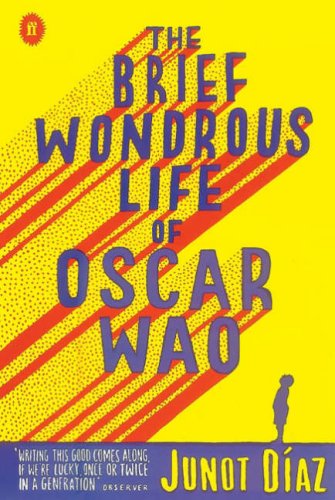
My brother gave me Díaz’s story collection for Christmas, which Nick has picked as one of his favorite titles of 2012. This Is How You Lose Her reunites us with Yunior, and in it Díaz uses a variety of perspectives to paint this portrait of a cheater’s downfall. The Round House just won Louise Erdrich a much-deserved National Book Award, and deals with a rape on a Native American reservation.


As for me, the best I’ve read this year is either Nathan Englander’s spectacular short story collection What We Talk About When We Talk About Anne Frank, or Kevin Powers’ The Yellow Birds, which is one of the first novels that deals with the most recent Iraq War in a way that feels equal to the subject. If you’re so inclined, you can read an excerpt here.

That’s it for 2012, ladies and gents. Celebrate duly, and check back with us in the New Year. Bonne nuit et bonne chance.

Posted on 01.07.13 // News

An Interview with William Logan

A noted teacher and poetry critic, William Logan is the author of numerous poetry collections—most recently, Madame X and an edition of John Townsend Trowbridge’s Guy Vernon, both released in 2012. William’s poem “Winter Before Winter” is featured in issue 37.1 of The Journal. Recently, he spoke with Associate Poetry Editor Jenna Kilic about stanzaic form in free-verse poetry, the role of reading in writing, and his own growing interest in his childhood experiences.

Jenna Kilic: In “Winter Before Winter,” your couplets connect thought to thought or observation to observation, building an argument; they also isolate and therefore augment a series of beautiful images. When you write, how do you conceive the stanzaic organization? How did you see the couplets working here?

William Logan: Dividing free verse into regular stanzas is fairly recent in American poetry—I suspect we owe Stevens that debt. When I was young, tercets and quatrains were common. I long felt that quatrains possessed a grave formality, while tercets absorbed a certain jaggedness of logic in their forward rush. Perhaps I’ve favored those forms too much, but I like the play of sentence against line, line against stanza. I like the astringency of couplets, their sharp-minded melodrama of form; but if overused they empty out everything they touch. Many poets now work in one-line stanzas. There I stop. I’d like to think that the poem conceives its own stanza, but that’s just romance.

JK: I’ve had contentious conversations with other poets about what constitutes a “poem.” Some think a poem is whatever you call a poem. I’ve argued that if you define it as everything you define it as nothing. Since we’ve blurred the lines between genres, how do we now define the term “poem”?

WL: That’s like trying to hit a moving target with a shoe, and not a very good shoe. Why believe that a poem is, say, the “best words in the best order,” if lovely poems by Williams have not-so-good words in not-so-good order? (Unless the argument is circular, a good poem automatically having best words in best order.) Any definition sufficient to corral the varieties of poetry would be ridiculously vague or longer than a Russian novel. I like a definition that doesn’t legislate or criminalize. The philosopher Michael Oakeshott suggested that the poet “does one thing only, he imagines poetically.” That will do.

JK: In Madame X, “Along the Autumn River” addresses the loss of fishing commerce and nature in your boyhood town of Westport Point, Massachusetts. I’ve had similar observations about losses in my hometown and on the river on which I grew up. What is your connection to this town and why does it mean more, say, than other places you’ve lived?

WL: For decades I wrote almost nothing about my childhood, because it seemed as dull, as profitless, as unpromising as most childhoods. Only in the past few books have I had cause to reconsider. My father was a salesman for Alcoa, and in 1955 we moved to Westport Point so he could work out of the Providence office. Westport is a village hard by the Rhode Island border. It had some small manufacturers in the nineteenth century (part of the northern reaches of town is still called Westport Factory), but the Point survived mainly on whaling and fishing. I went to first and second grade in a two-room schoolhouse—the last names of my classmates (Tripp, Macomber) could be found in the census records a century or more before. It was a quiet, unpretentious place; and we were allowed to roam without restraint. The bachelor who lived behind us down the hill suffered our visits with extraordinary grace. When he later murdered a man over the salvage of a boat, my father flew back to serve as a character witness at his trial. By then we lived in Pittsburgh, but we returned summers until I was fourteen. I realize now that what I took for granted has almost vanished from American life. The town hasn’t changed much, but the locals can’t afford the houses unless they inherit.

JK: Many of your poems might be considered erudite, and I’m astounded by how well-researched they are. How do you write the historical poems? Does the desire to write a poem fuel your research, or do you acquire the necessary knowledge and then decide to write the poem?

WL: I hope I’m too wayward to have a method. I’m willing to chase facts if facts are required. On rare occasions, my stray reading has tossed up a topic, though I’ve read hundreds of memoirs and books of letters without an end in view—if that’s a method, it’s singularly unproductive. The letters between the Custers in Madame X and the letter from Charles Dodgson in Sullen Weedy Lakes are based on real letters, with only the adjustments the syllabic form demanded. For the long poems “Keats in India” in Vain Empires and “The Underground” in Sullen Weedy Lakes, I read, then read more. The Keats poem was based on travelers’ journals; it steals a few images from Bishop Heber. “The Underground” required at least paltry knowledge of the intricacies of Victorian banking and the causes of the Crimean War. I’m sure some of the facts in my poems are just imagination, and some of the imagination plain fact.

JK: What advice do you have for poets graduating from MFA programs?

WL: Eat cheaply. Buy more books than you can read. Read more than you buy. Brush your teeth.

JK: Movies. You’ve watched so many, and you seem to love westerns and Japanese films. What is it about these genres? Do you find similarities in your preference for movies and your preference for poems?

WL: No doubt I watched movies on the little Magnavox my parents owned in the fifties, but what I remember are evenings they took us to the Westport drive-in. I used to see 150 or more new movies a year—now it’s barely one a week. I loathe pretentiousness, artiness (I’m not a big Godard fan), and virtually any American movie made in the fifties—all that unbearable social conscience—honorable ideas, but too much hectoring. I loved Bergman when I was young; now I’d rather see Preston Sturges, Ozu, Kurosawa, with a few bad thrillers thrown in. Like Wittgenstein, I find that movies offer escape without regret (he preferred westerns)—unless the movie is awful, of course, as so many are. Bad thrillers excepted.

If my love of movies bears any relation to my love of poems, someone will have to explain it to me.

Posted on 01.01.13 // News

2012 Pushcart Prize Nominees

There is no rest for the weary around The Journal’s offices—I was as busy as a one-armed paperhanger in November, and the posting around here has suffered a bit as a result. But, as we head into the home stretch of 2012, I plan on getting back on a more regular schedule, so please check in during December for posts on the current state of the literary translation market and The Journal staff’s favorite volumes of the year, as well as interviews with some of our distinguished former contributors.

As the days grow short though, there’s no mistaking that we’re in the midst of award season. So, in keeping with Holiday spirit, we at The Journal have submitted our Pushcart nominees and we just can’t keep them to ourselves any longer.

In fiction, we’re proud to nominate “Out of Illiana” by Chidelia Edochie (which appeared in issue 36.1, our winter 2012 issue) and Joan Murray’s “Abu Grave” (Issue 36.1, Winter 2012). In nonfiction, we were delighted to be able to put Robert Long Foreman’s “James and the Giant Noise Violation” (Issues 36.1, Winter 2012) up for the honor, as well as “What is the Shape” by Liz Scheid (Issue 36.3, Summer 2012). And in the poetry department, we happily sent along Christina Veladota’s “The Threshold of Can We Do This Now” (Issue 36.2, Spring 2012), and Keetje Kuipers’ “Just Outside” (Issue 36.4, Autumn 2012). Unfortunately, we did not have anything appropriate for the category of “literary whatnot” as listed on the Pushcart website, but we’ll work on that.

The bribe envelopes have been distributed, so now it’s just a matter of counting the, um, votes.  See you around, dear readers, and stay warm out there.

Posted on 12.02.12 // News

Justin Runge Interview

Justin Runge lives in Lawrence, Kansas, where he serves as poetry editor of Parcel and helms Blue Hour Press. He is the author of Plainsight, published by New Michigan Press. Poems of his have appeared in Linebreak, DIAGRAM, Harpur Palate, and elsewhere. He can be found at www.justinrunge.me. Justin’s poems—“The Arbor” and “Love” —appeared in Issue 36.4 of The Journal, and he recently spoke with Poetry Editor Michael Marberry about these poems, the connections between poetry and film, and the role that technology might play in literary publishing.

Michael Marberry: “The Arbor” and “Love” are such weird, wonderful things—enigmatically titled, very carefully constructed at the line-level, and beautifully haunting in their imagery. I’m curious: where in the world did these poems come from? What inspired or shaped them? I must know the answers to these questions immediately!

Justin Runge: Well, the real “secret” behind the project is that each poem is a response to a trailer for a movie I haven’t seen. The project is inspired by Rae Armantrout’s Versed, which has a poem—I think it’s called “Versions”—with sections titled after a film. She doesn’t draw attention to their true natures, but I remember thinking, “Huh, The Happening? Like that M. Night Shyamalan movie?” The application of ekphrasis to trailers was very intriguing to me. I was in a slump, so I thought that using trailers as prompts would get me writing. Like Armantrout, my poems share titles with their respective films: “Love” and “The Arbor.” (The trailers can be found here and here.)

MM: Wow! I never would’ve guessed that these poems spawned from movie trailers. In fact, hearing you talk about these poems, it seems like form was the major catalyst for their creation. That’s very interesting.

JR: Form fascinates me, and trailers are a definite form. With a little distance from their advertising function, they become almost experimental short-films—clipped narratives with overt re-sequencing and a primacy placed on the compelling image. But their form has become rigid: similar run-times, similar beats, similar musical cues. I wanted to mimic that stricture by using the same “fast-cut” line length, the same number of lines, and even the same number of stanza breaks.

I’m also fascinated by the strange relationship that trailers have to narrative. They’re promoting something distinctly narrative, yet they interpret that narrative, twist it, condense it, and leave it incomplete. A trailer’s true narrative becomes something “above” the trailer, emotion-driven. An audience’s emotional response to any trailer would graph pretty cleanly to Freytag’s triangle, I think.

MM: So, you chose films with which you were unfamiliar. Then what? Take us through your process a little more and what you discovered.

JR: It was important for me to draw the images out as purely as possible, so, as I said, only trailers for films I hadn’t seen made the cut. No ties or affinities junking things up. Films with minimal titles—one word, with/without an article—so readers would arrive without preconceptions. “Some Like It Hot” or “There Will Be Blood” were out of the question.

I’d watch the trailers only once and pull everything from memory. I was curious to see just how resonant the images would be, how they would concretize. This also kept me from doing too much scavenging for “good stuff” or prewriting. What hit me hardest? What seemed strangest or most capacious with meaning? Taking those images, converting them to language, unpacking them—that was the fun of it.

Returning to the poems and the trailers now, I’m surprised how little they sync up. At the time, I felt they were almost documentary, but they’re much less slavish than I had thought. I color out of the lines, and that’s a good thing.

MM: I’m very intrigued by the possible intersections between poetry and film, as they seem like two forms of expression uniquely capable of rendering traditional narrative, high lyricism, and formal experimentation. (I’m thinking, in particular, of folks like John Ashbery, Maya Deren, Lisa Jarnot, Andy Warhol, etc., who clearly saw some connection between these forms.) If “The Arbor” and “Love” are inspired by films that you haven’t seen, let’s talk about things that you have seen or experienced. Are there any filmmakers whose works strike you as particularly “poetic” in some regard? Or, conversely, are there any poets whose works strike you as being “cinematic”?

JR: You nailed the elements that film and poetry share. An even more distressing characteristic: they’ve become definitions of other genres, other categories. It’s more of a problem for poetry. People love to call other media “poetic,” but they’d rather not engage with actual poetry. The adjective (“poetic”) is almost pejorative. Whereas “cinematic” designates cool, vastness in scope, and contemporariness, “poetic” indicates dowdiness, pretension, and impenetrability. We’ve lost their critical applications. They’ve become value definitions, useless.

Jeez! Now that I’ve complicated the question, I’ll answer it. David Lynch is a poetic filmmaker— disjunctive, dreamlike, referential. He also avoids language in his work, which actually makes his work more poetic. The late Chris Marker, Murnau, Tarkovsky, Dreyer, Ozu—they succeed because they’re using the language of film and not actual language. Moments of Michael Haneke’s The White Ribbon and Wim Wenders’s Wings of Desire stay with me like lines and stanzas. The obvious reigning cinematic-poet is Terrence Malick, though I’m worried his flood of new work will sour people to his brand of mystic sentimentality. Lars von Trier’s latest films extend toward poetry (maybe bad poetry?), but he’s too much a filmmaker to allow an entire movie to live in a poetic space.

Cinematic poets…that’s harder. My two pieces don’t build that bridge—they’re poems, through and through. It’s actually difficult to think of examples because there’s the lazy definition of “cinematic” to avoid: one that involves kineticism, heavy plotting, ostentatious transition. That describes my poetry when I was younger, when I was riffing off other art-forms as I found my legs. Maybe it’s easier to think of the cinema of Eisenstein and Griffith—spatial relation, montage, juxtaposition—in the attempt to find cinematic poets. Strand, Simic, and Stafford come to mind; their use of body placement and setting feels filmic. The tension and cross-cutting of Forché’s “The Colonel.” This feels like uncharted territory, Michael! There’s a literature thesis in there somewhere!

MM: Ha! Yes, I think there might actually be a book in there. It’s certainly very interesting to think about, at the very least. OK…last question: I’m a big believer in the aural power of poetry, so it’s such a delight to hear you read your poems in our recent issue. We’ve only recently begun to offer this audio dimension to our readers with the introduction of our website and our online issues. I know that you’re a pretty savvy tech-nerd and have been involved with some online publishing—most notably the gorgeous web-chapbooks at Blue Hour Press. What sort of role do you see technology playing in literary publishing? What are some of the benefits and/or dangers of the literary community’s shift toward more and more online production and distribution? Where would you like to see all of us head, as a community of writers and readers, in this regard?

JR: I don’t think technology is just playing a role these days—it’s the stage (or, at least, one of them) and it’s gaining square footage. The sooner people step onto this stage, the sooner we can gather people into its auditorium.

The major risk, I think, is that people see the object, the work, the effort in a digital space as being less physical. There’s a weightlessness to digital publishing. Today’s reader can sort of cloud-hop to this Dickens novel, this long-form essay, this poetry blog—constantly consuming half of the work, a quarter of the work, and bouncing on. It’s like a glorious buffet where you can take a bite of this, a few grapes, a sip. There’s less pressure to sit down to dinner.

I’ve always said that online publishing needs to gain a little gravity. Publishers need to make the experience feel as lavish and tactile as print, but generous in ways that only the web can provide. Lots of print books come with “bonus content” in the back, which I think is silly. The web can do that effortlessly. The Journal can put audio of the author right next to the work, publish an interview with her a few months later, connect the work to related content that requires just a click. But it has to be beautiful; the reader has to want to dwell in these spaces. A book will always feel comfortable in this way. That’ll ensure its continued existence. How do we begin to curl up with the web?

Posted on 11.08.12 // News

Links Roundup, October 2012 Edition

As you might have guessed, a large part of my internet travels are dedicated to essentially validating myself as a lover of books and literature; storing up retorts to people who think it passé, self-indulgent, or uninformative to read with the idea of broadening oneself (and, incidentally, becoming a better writer—but still.); and perhaps finding solace in the company of even loonier bookies.

Unsurprisingly, the internet provides when asked.

Leave it to Kurt Vonnegut to display the clarity of expression—in this case, of quite important social ideas—enabled by the mastery of language. In his 1973 letter, he puts to shame the Drake School Board for banning his books on the grounds of obscenity, evilness, or filth, exposing the very lack of nuanced thinking in the administrators that literature is supposed to cultivate, and which would have saved his books from what he called “the now famous furnace of your school.” He provides a bold reminder that to be un-American is to be “ignorant and harsh” rather than un-profane and unquestioning.

I found further reassurance in the form of the following Atlantic article, which contends that the story of the ailing, shriveling publishing industry—which we’ve all been following—is a myth. Or rather, that the industry’s been changing beyond recognition to some traditionalists, but been by no means dying. It might very well be that the advent of e-readers incorporates the act of reading into the ever-digitizing lives of those who don’t sniff books at the library, and may improve sales of both paper and electronic books. What the publishing companies are lamenting, it seems, is their reliance on Amazon, Google, Microsoft, and Apple—the new power brokers in publishing.

This article is a short reiteration of the above. The appearance of both articles around the same time suggests to me that we’re reaching a threshold in the e-book phenomenon where its real effect is becoming clearer.

And lastly, here’s a man who has read more books than I ever will, and who loves and hates and defends books more fiercely than I ever could. This is a biography of a man’s life as a reader, entitled “My 6,128 Favorite Books,” which I found particularly refreshing for hazarding some unpopular opinions that I’ve held for awhile. Things like, “Don’t saddle me with a book as a gift,” “Speed-reading is utterly pointless,” “Sharing the same ethnic heritage as an author does not imply any obligation to read their book,” and finally, apropos of his distaste for e-books: “the world is changing, but I am not changing with it.”

That’s our October links roundup for you. As always, we’ll share the fruits of another month’s worth of compulsive bookishness one month from now.

Posted on 10.31.12 // News

The Journal is a magazine of literature published four times yearly and supported by the Department of English, private contributions, advertisements, and sales. The magazine is endorsed by the Ohio State University, and its contents determined solely by the editorial staff. Address all correspondence to The Journal, The Ohio State University, Department of English, 164 W. 17th Avenue, Columbus, OH 43210. E-mail: managingeditor@thejournalmag.org.