We Have A Winner! The 2014 Wheeler Prize for Poetry Goes to Talvikki Ansel!

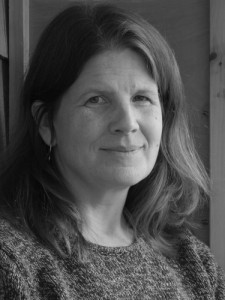
Talvikki Ansel imageThe Journal is excited to announce that the winner of the 2014 Wheeler Prize in Poetry is Talvikki Ansel for her third collection of poems, Somewhere in Space, due out this fall with The Ohio State University Press. She is the author of the Yale Younger Poets selection, My Shining Archipelago, and Jetty and Other Poems. A former Stegner fellow and recipient of a residency from the Lannan Foundation, Ansel has published widely in venues such as Poetry, Blackbird, The Atlantic, and The New Republic. She lives in Rhode Island.

Many congratulations to our nine wonderful finalists:

Fritz Ward for Dearest Cannibal
Samantha Deal for Taxonomies/Something Opened
Claire Wahmanholm for Blueshift
Steven Gehrke for Ships of Theseus
Emily Vizzo for A Gun for the Girl
Rebecca Lehmann for It was all a Mistake and I’m Not a Woman
Marlys West for Is This How You Mean to Go On
Kim Garcia for Brighter House
Kimberly Grey for The Opposite of Light

More than 550 manuscripts were submitted for this year’s competition, and we would like to thank everyone who participated. The quality of submissions was extremely high, and the screeners worked hard and with considerable pleasure. Kathy Fagan was the final judge. For further information about The Ohio State University Press/The Journal Award and The Charles B. Wheeler Prize, see The Ohio State Press.

Submissions for next year’s Wheeler Prize in Poetry will open in September 2015. For submission guidelines, please visit http://english.osu.edu/creative-writing/journal/charles-b-wheeler-prize.

Review of Lungs Full of Noise by Tessa Mellas

Tessa Mellas. Lungs Full of Noise. Iowa City, IA: University of Iowa Press, 2013. 133 pp. $17.00, paper.

The twelve stories that make up Tessa Mellas’ debut collection, Lungs Full of Noise, are absorbing, haunting, and unforgettable. The collection, which won The Iowa Short Fiction Award, is darkly fantastical and delightfully strange, calling to mind the works of Angela Carter, Kelly Link, Karen Russell, and Kevin Wilson. The stories feature a leaf-covered baby with vines sprouting from his body, figure skaters who affix ice skate blades directly to their feet, a green-tinted college roommate from one of Jupiter’s moons, three young girls stranded in an attic by rising sea levels, and teenage girls who eat nothing but grapes so they can dye their skin lavender to attract prom dates. Mellas’ prose is lovely, precise, and surprising; she takes no shortcuts and doesn’t rely on familiar tropes or clichés. Each sentence, and each story, is original and unexpected.

Although there is a lightness in the lyrical language and playful humor that runs throughout this collection, these stories have heft. They are concerned with issues of self-doubt and insecurity, ambition, jealousy, fear, loss, powerlessness, control, grief, and unfulfilled longing. Themes of troubled motherhood and the confinements of femininity appear again and again. Several stories address the deteriorating environment and the impending apocalypse. The stories also show a preoccupation with the body, examining the ways in which people try to manipulate their bodies, the ways in which our bodies betray us, and the body’s mysterious hungers.

The characters that inhabit this collection are often overwhelmed and outmatched by their desires, and the stories explore the ways in which their misguided attempts at fulfilling these desires go awry. In “So Many Wings,” a woman named Bea discovers that her ex-husband died in a car accident and steals his severed arm from the morgue as she is identifying his body. When she unwraps the arm back in her apartment, “it makes her body feel buoyant,” and she falls asleep with the arm tucked into the sheets of her bed. In “The White Wings of Moths,” a mother longing to make things right with her estranged daughter fills her home with thousands of caterpillars until the house becomes overrun with moths. The moths “coat the walls… Around the chimney, they huddle en masse. They smooth the chimney’s edges out. They bulge, a tumorous growth, a snowy beast… [Bea] unearths a cocoon. A cocoon the size of a daughter.” In “So Much Rain,” three sisters living in the top floor of an abandoned house during an apocalyptic flood struggle against their inevitable end, eating Polaroid squares and wallpaper and crayons, calling each other names and playing nonsensical games. Unable to understand, accept, or change their circumstances, Mellas’ characters follow their own flawed and desperate logic.

For me, the standout story was “Bibi from Jupiter,” in which the narrator moves into her college dorm to find that her roommate hails from one of Jupiter’s moons. “When I marked on my roommate survey sheet that I’d be interested in living with an international student,” the story opens, “I was thinking she’d take me to Switzerland for Christmas break or to Puerto Rico for a month in the summer. I wasn’t thinking about a romp around the red eye of Jupiter, which is exactly what I’d have gotten had I followed my roommate home.” The narrator’s sarcasm and sharp wit are flimsy covers for her insecurities and hurt, and the reader learns about Bibi through jealous and guarded descriptions. “She’s not an all-out green,” the narrator explains. “Tinted rather, like she got a sunless tanner that didn’t work out. Her ears are inset like a whale’s, and she doesn’t have eyelids.” But Bibi is smart and popular, especially with the boys living on their hall, and the two girls’ relationship becomes complicated and fraught. The narrative deftly delves into the unexpected, but the outcome still seems inevitable and fitting.

Another favorite, “Quiet Camp,” about a camp for girls who talk incessantly, is breathtakingly lyrical and immensely moving. It begins, “We arrive on a westerly wind, our lungs inflated with speech. Our mothers said this would happen if we didn’t learn to quiet our tongues. Our tongues couldn’t be stopped, so up we went. Up and up. Until we knocked the chandeliers with our heads.” The story, told from the collective perspective of these chatterbox girls, follows the girls’ attempts to quell their natural proclivity for constant speech, and the harsh punishments they receive when they fail to do so. The descriptions of their time at the camp are evocative and lovely: “A rowdy tribe, we walk through the woods…The sound of our speech swarms like the hiss of cicadas thrashing out of their husks. Syllables tap off our teeth. Our dimples crease and uncrease in a Morse Code frenzy.” Told with the peculiar mix of grotesque hyperbole and dark beauty characteristic of fairy tales, this story left me unnerved but enchanted.

These stories are unsettling. They work themselves into your mind and climb under your skin, and they linger. Mellas’ characters are eccentric but wholly convincing, and it’s difficult not to feel the full and devastating weight of their vulnerabilities, wounds, and desires. These stories relentlessly examine the weakness of the body and the desolation of a future where the world’s resources have dried up. They lead the reader far into the realm of the impossible and the strange to expose the familiar in a new and harsh light. But buoyed by the beauty of the language and the wonder of these unexpected narratives, this collection is captivating. This is an important, intelligent, and mesmerizing book, one that establishes Mellas as an original and unflinching writer.

Summer Reading: Managing Editor Rebecca Turkewitz

I’m a big fan of gothic fiction, horror, and all things creepy, and this summer I’ve read some really wonderful spooky books. If you’re looking for a good, creepy read, I highly recommend any of the following. After all, the end of August is the perfect time to curl up with a ghost story, listen to the wind shaking the leaves outside, and wonder what might happen if that shadow in the corner of the room suddenly were to take shape and step into the light.

Early in June I read Dan Chaon’s most recent book, Stay Awake, and fell in love with it. Every story in this collection is original, emotionally charged, and masterfully written. The book is primarily a work of literary fiction, but all the stories share a sort of gleeful enjoyment of the cosmic dark and the things that lurk there. And some are genuinely scary. The last story in the collection, “The Farm. The Gold. The Lilly-White Hands.,” is tremendous—it instantly became one of my all-time favorite ghost stories.

Recently, I spent one glorious evening reading True Irish Ghost Stories cover to cover. This delightful 1926 book is a collection of firsthand accounts of otherworldly encounters, compiled by the author and priest John Seymour.

I also finally got around to reading 20th Century Ghosts, a collection of short stories by horror heir Joe Hill (he’s Stephen King’s son). I didn’t think every story in the collection was a winner, but “Best New Horror” was haunting and powerful, and it was the first story in a long time to actually keep me up at night. It is a disturbing, violent, and unsettling narrative that masterfully raises the question of why people seek out disturbing, violent, and unsettling narratives. Without getting obnoxiously meta, the story turns the magnifying glass on the reader in a way that is alarming and insightful. “Black Phone,” “Abraham’s Boys,” and “20th Century Ghost” were also standouts that I really enjoyed.

I also read and loved Jennifer Egan’s The Keep. It was a classic can’t-put-it-down-until-you’re-done page turner for me, and I was so impressed with the well-handled frame narrative and the wonderful gothic setting and undertones. If you want a (very) smart beach read, complete with crumbling castles and secret, underground tunnels, this is your book.

One of the highlights of my summer, literary or otherwise, was reading a collection of HP Lovecraft’s stories on a beach in Marblehead, MA. Lovecraft’s fictional Massachusetts landscape is spread out across the northern coast of the state, and it was a joy to think that I might have been able to see the distant shoreline of Arkham across the bay, if that haunted town actually existed. And further up the coast in Newburyport, I’d be able to catch the rickety bus to mysterious, decaying Innsmouth.

I’m currently reading Haunted Legends, an anthology edited by Ellen Datlow and Nick Mamatas. The editors solicited some of the most successful horror and fantasy writers to compile a collection of contemporary ghost stories that incorporate the folklore and legends of specific places. Laird Barron’s sad, unsettling, and unforgettable story “The Redford Girls” is included.

If you’re not so inclined towards horror, here are my favorite non-creepy books from my summer reading: Charles Portis’ True Grit, Amy Bloom’s Come to Me, Louise Erdrich’s Four Souls (though, I would recommend reading Tracks first), and John LeCarre’s The Spy Who Came in From the Cold. And although I didn’t love all of Thisbe Nissen’s Out of the Girls Room and Into the Night, her story “Way Back When in the Now Before Now” completely blew me away and brought me to tears.

Happy reading, friends.

Holiday Wishlist 2013: Associate Fiction Editor Rebecca Turkewitz

On My Reading Wishlist this Winter Break:

1. Let The Right One In by John Ajvide Lindqvist, translated by Ebba Segerberg. The 2008 film adaptation of this Swedish vampire novel is phenomenal, and I’ve heard that the book is even better. The novel has been on my to-read list since I first saw the movie four years ago. I’m excited to finally have the chance to get around to it and spend some time transported to the sparse, newly haunted small town of Blackeberg, Sweden.

2. The Beautiful Thing That Awaits Us All by Laird Barron. I first heard about this collection of cosmic horror stories when a friend showed me a wonderful article by Adrian Van Young from the Slate Book Review (which can be found here). For those unfamiliar with “cosmic horror,” Van Young defines it as “a subgenre of weird fiction that resounds with humankind’s piddling insignificance in the greater scheme of the universe.” It’s a genre developed by H. P. Lovecraft, and I am so curious to see how Barron has modernized it and made it his own. If nothing else, I think this is maybe the best-titled collection of stories that I’ve come across in a long time.

3. The Next Time You See Me by Holly Goddard Jones. This novel, often described as a literary thriller, has been burning a hole on my bookshelf since August. Because I’d heard that it’s a page-turner, I was worried I’d pick it up and ignore all my grading and coursework until I had finished it (a problem I frequently have). Now that I’m on break, I am thrilled that I have some uninterrupted time to read it. Goddard’s story collection, Girl Trouble, is spectacular (I mean, really just unbelievably good), and so I’ve been dying to finally get around to her novel.

Review of Revenge: Eleven Dark Tales by Yoko Ogawa; translated by Stephen Snyder

Yoko Ogawa; translated by Stephen Snyder. Revenge: Eleven Dark Tales. New York, NY: Picador, 2013. 162 pp. $14.00, paper.

The stories in Yoko Ogawa’s Revenge: Eleven Dark Tales are not horror stories, as the front cover and the title of this collection might suggest. Instead, these eleven linked tales are “dark” because they are primarily concerned with those things that are traditionally kept out of the light: grief, tragedy, the desire to harm others, death, mental illness, alienation, obsession, failure, loss. Ogawa drags these disturbing subjects into the light, prying into her characters’ most private fears and desires. Her narratives are engrossing, twisting into unpredictable and peculiar shapes, and her prose is swift, unadorned, and powerful.

“It was a beautiful Sunday,” the first story begins. “The sky was a cloudless dome of sunlight…Everything seemed to glimmer with a faint luminescence: the roof of the ice-cream stand, the faucet on a drinking fountain, the eyes of a stray cat, even the base of the clock tower covered with pigeon droppings…You could gaze at this perfect picture all day…and perhaps never notice a single detail out of place, or missing.”

From here, Ogawa makes a habit of uncovering the undercurrent of strangeness and imperfection that runs beneath seemingly unremarkable and familiar scenes. She draws attention to the missing details, illuminating the hidden sadness, anger, and violence that lurk in the corners of daily life. A mother continues to buy her deceased son strawberry shortcakes for his birthday years after the child suffocated to death in an abandoned refrigerator. Two elderly women build a museum that displays used implements of torture. A woman whose husband is having an affair accidentally stumbles upon the dying moments of a pet Bengal tiger, and takes comfort in stroking the tiger’s fur during its last breath.

I was most impressed with the story “Old Mrs. J,” a tale about a writer who observes the unsettling behavior of her landlady, Mrs. J, whose husband recently went missing. Soon, Mrs. J’s garden begins to produce carrots that are shaped uncannily like human hands. The story skillfully walks the line between the supernatural and the simply strange. The mournful tale is set against the backdrop of a garden of rustling kiwi trees, which rivals any Gothic castle in the category of best creepy locale: “The kiwis…grew so thick that on moonlit nights when the wind was blowing, the whole hillside would tremble as though covered with a swarm of dark green bats.” The story is masterfully paced—eerie and unnerving in all the right places—and old Mrs. J is a villain to delight in.

Another standout was “Sewing for the Heart,” a story in which a bag maker is tasked with crafting a custom bag for the heart of a nightclub singer. The singer’s heart is exposed, having grown on the outside of her chest. The narrative is captivating, and the descriptions of the heart are beautiful and surprising: “It looked like a spider, or a work of modern art. Or a fetus that had just started to grow.” Of all the narrators in the collection, the voice of this obsessive bag maker struck me as the most memorable and interesting. “When you live alone as I have for many years,” the bag maker reports, “daily life only becomes simpler and simpler.” But before the reader can feel too sorry for this isolated man, he assures the reader that his passion for his work is quite a different thing. “You may be thinking that a bag is just a thing in which to put other things,” he explains. “And you’re right, of course. But that’s what makes them so extraordinary. A bag has no intentions or desires of its own, it embraces every object that we ask it to hold…To me a bag is patience; a bag is profound discretion.” The bag maker becomes obsessed with the singer’s heart and with the bag he is constructing for it. The narrative parades on towards an inevitable, yet still striking, conclusion.

The stories in the collection are linked to one another, but in puzzling and tangential ways. The broken-hearted beautician in “Welcome to the Museum of Torture” finds the dead hamster that belonged to the bag maker in “Sewing for the Heart.” A teenager coping with her mother’s illness in “Fruit Juice” discovers an abandoned post office full of kiwis, which was stockpiled by the sinister landlady from “Old Mrs. J.” This same teenage girl plays a bit part in the first story in the collection, as an adult, crying in the kitchen of a bakery. Tracking the elaborate web of intersecting points is extremely satisfying, but the overlapping details do not provide the impression of unification. Instead, there is a randomness to the way the characters’ stories bump up against one another, which only highlights how untethered and unknowable the characters are.

The people that inhabit the world of this collection are outsiders. They are lonely and alienated, and for the most part they keep their emotions and desires hidden. But in each story the characters experience a few heart-wrenching moments of connection and honesty. A novelist who finds it too difficult to fit into the role of wife and mother says goodbye to her stepson for the last time: “You’ve been a good boy…I wish that I was so good.” When the curator of the Museum of Torture is asked if he ever has the urge to try out any of the instruments, he finally, grudgingly, admits, “I don’t exhibit an object unless I have the desire to use it.”

Although it is tempting to draw comparisons to the work of such diverse writers as Edgar Allan Poe, Haruki Murakami, Shirley Jackson, and Gabriel Garcia Márquez, Ogawa’s prose is wholly unique. The tales found in Revenge are perhaps most accurately compared to the kind of eerie dreams that take our familiar world and knock it just slightly off-kilter. This absorbing and inventive collection certainly has the same effect as an off-putting dream: it will leave you mesmerized, unsure, and shaken.

Summer Reading: Associate Fiction Editor Rebecca Turkewitz

Ten Great Books I’ve Read This Summer, in No Particular Order:

  1. We Have Always Lived in the Castle, Shirley Jackson
  2. Revenge: Eleven Dark Tales, Yoko Ogawa
  3. Drinking Coffee Elsewhere, ZZ Packer
  4. Nightmares and Dreamscapes, Stephen King
  5. The Toughest Indian in the World, Sherman Alexie
  6. The Outlaw Album: Stories, Daniel Woodrell
  7. Woman Hollering Creek And Other Stories, Sandra Cisneros
  8. Tunneling to the Center of the Earth: Stories, Kevin Wilson
  9. Rebecca, Daphne du Maurier
  10. A Visit From the Goon Squad, Jennifer Egan


Right now I’m in the middle of Gillian Flynn’s wildly popular Gone Girl, and I’m intrigued but still undecided. Next on my list? Holly Goddard Jones’ The Next Time You See Me, which arrived on my doorstep from Amazon not ten minutes ago. If it’s even half as wonderful as her story collection, Girl Trouble, I’ll be happy. Also in that package from Amazon are Andrew Hudgins’ memoir, The Joker, and David Small’s graphic memoir, Stitches.